
Forestry Mulching in Southern Illinois & the Metro East
Grind standing trees and brush into mulch in a single pass. The mulch stays on your land. No burn piles, no torn-up soil.
Quick Answer
Grind standing trees and brush into mulch in a single pass. The mulch stays on your land. No burn piles, no torn-up soil.
What forestry mulching actually does
Forestry mulching grinds trees, brush, and undergrowth into mulch where they stand, in one pass, with one machine. The mulch stays in place, feeding the soil, suppressing regrowth, and protecting against erosion. No burn permits. No bare ground left behind.
If you've ever watched a traditional land-clearing crew work — feller buncher knocks down trees, skidder drags them to a deck, chipper runs full-tilt, trucks haul chips off site, dozer pushes the slash into burn piles, burn permit, smoke, controlled fire, regrade, reseed — you know it's three jobs stacked into one week. Forestry mulching replaces all of that with one machine and one operator.
Our skid-steer runs a purpose-built cutting head on the front: a heavy drum with carbide teeth, spinning at high RPM. The operator drives the machine into standing brush and trees and the head grinds everything in its path into chips. Those chips fall behind the machine in a mulch layer that protects soil, suppresses weeds, and breaks down into organic matter over a couple of seasons.
It's selective by design. You tell us what stays — mast trees, shade trees, pond-edge hardwoods, a specific hedge row — and the operator threads around them. Most customers end up with land that looks intentional: wooded where they wanted wooded, open where they wanted open, walkable everywhere.
No burn piles means no burn permits. No dozer means no torn-up topsoil. You get a clean finish in hours or days instead of weeks.
What This Looks Like Done
Drag the handle. Real job photos from the same property — overgrown when we pulled in, walkable when the machine loaded up.
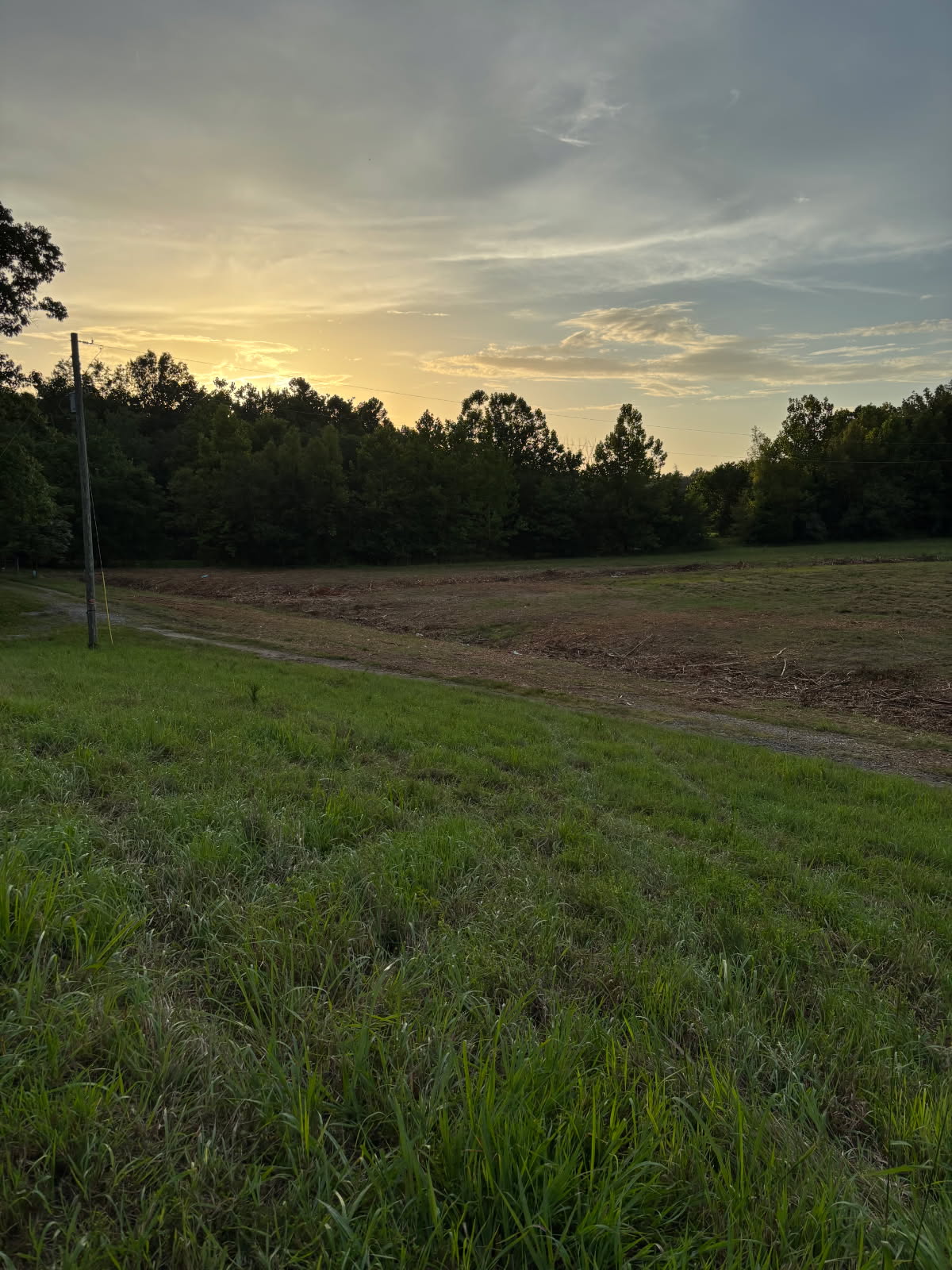
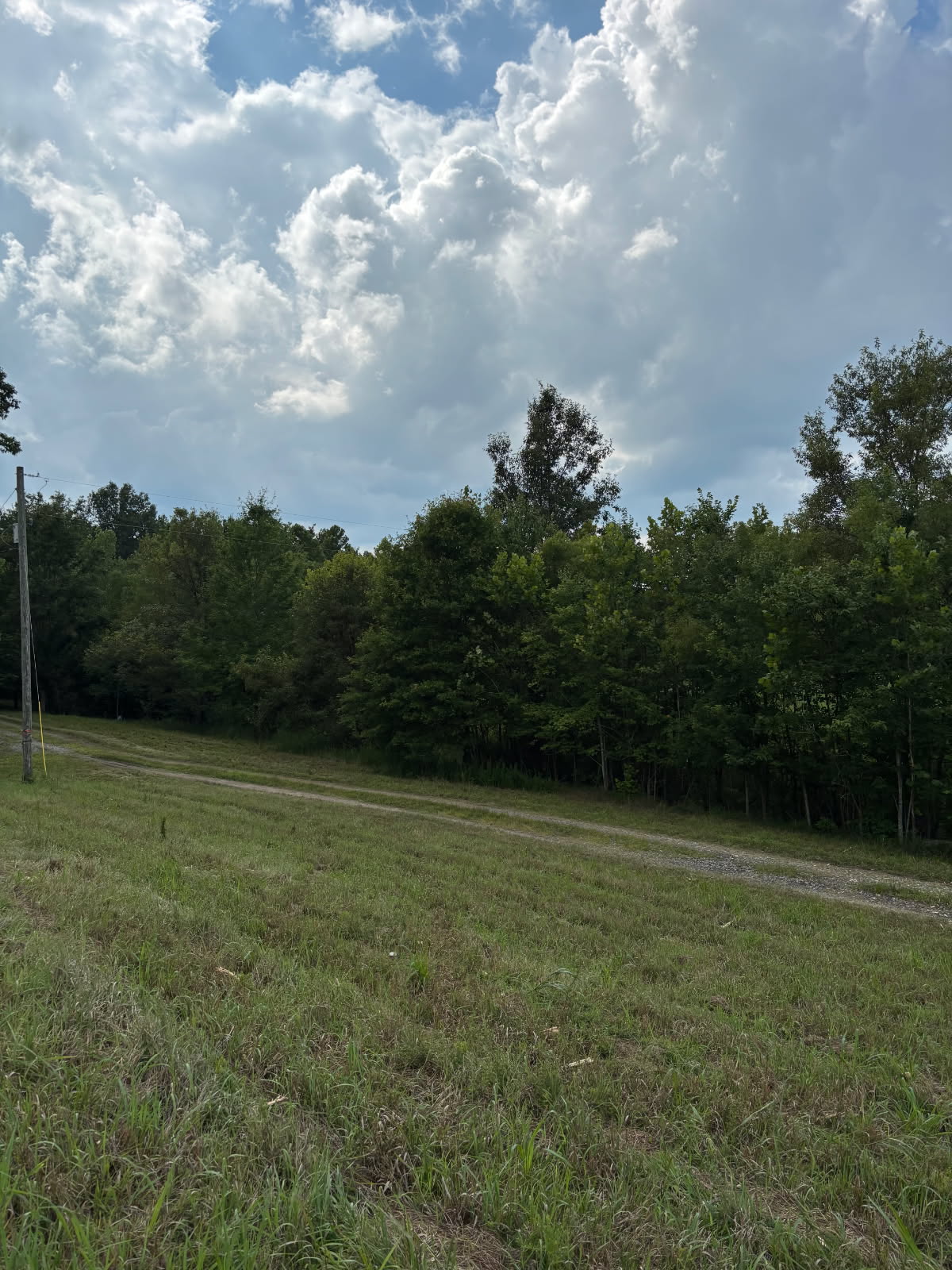
Same pole, same path. The tree line behind it pushed back to open ground.
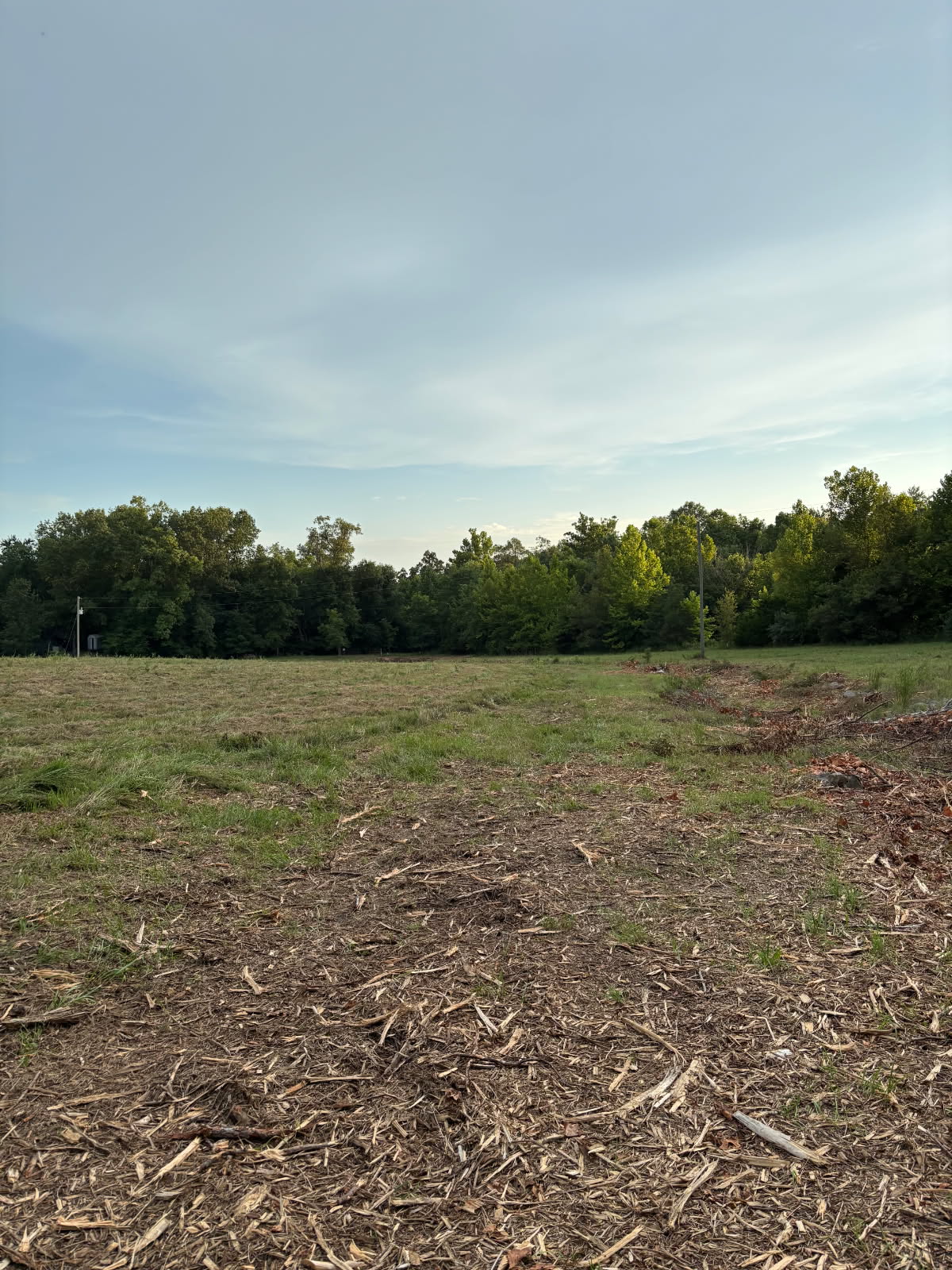
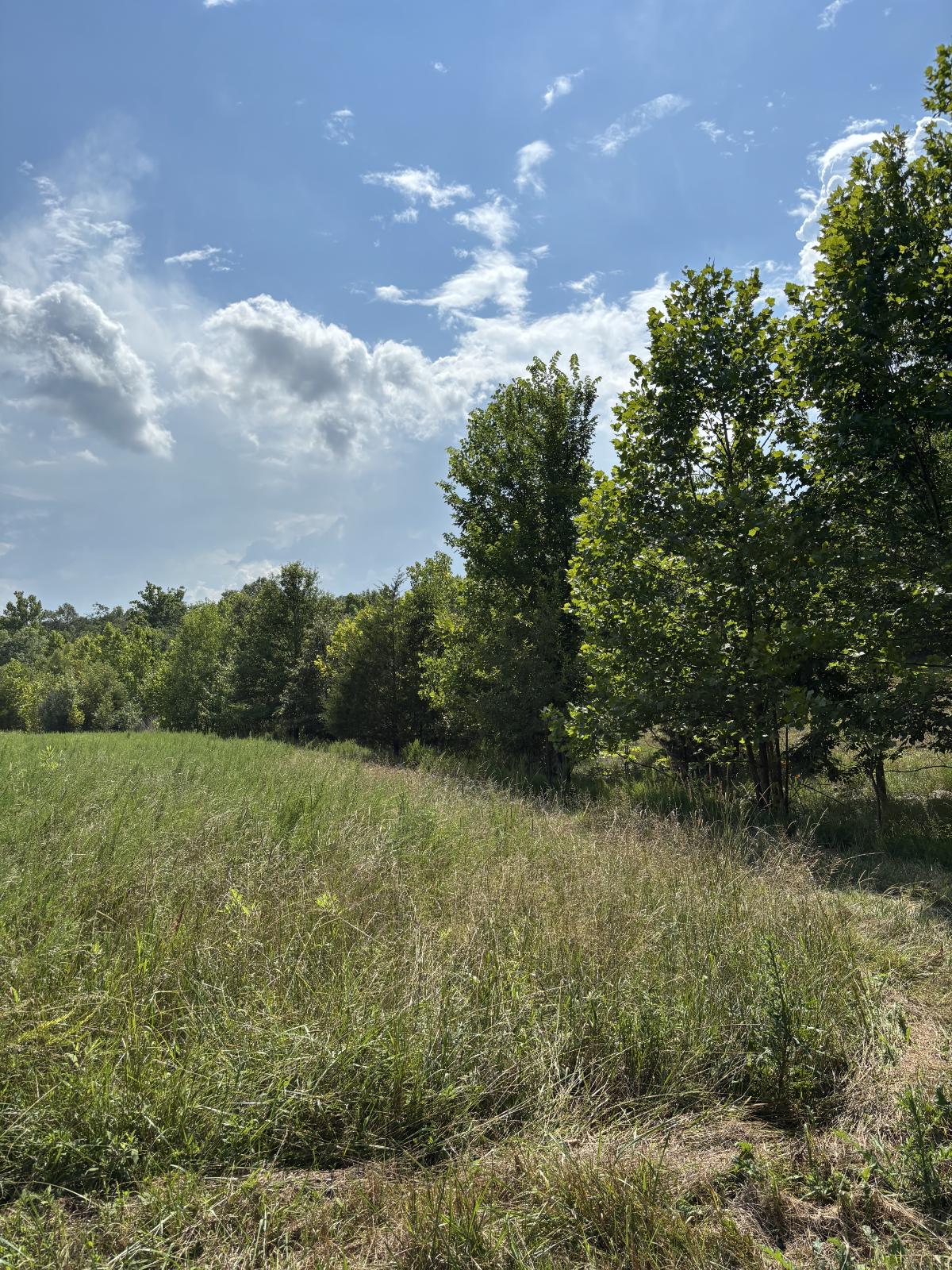
Waist-high grass and volunteer saplings ground into a clean mulch bed.
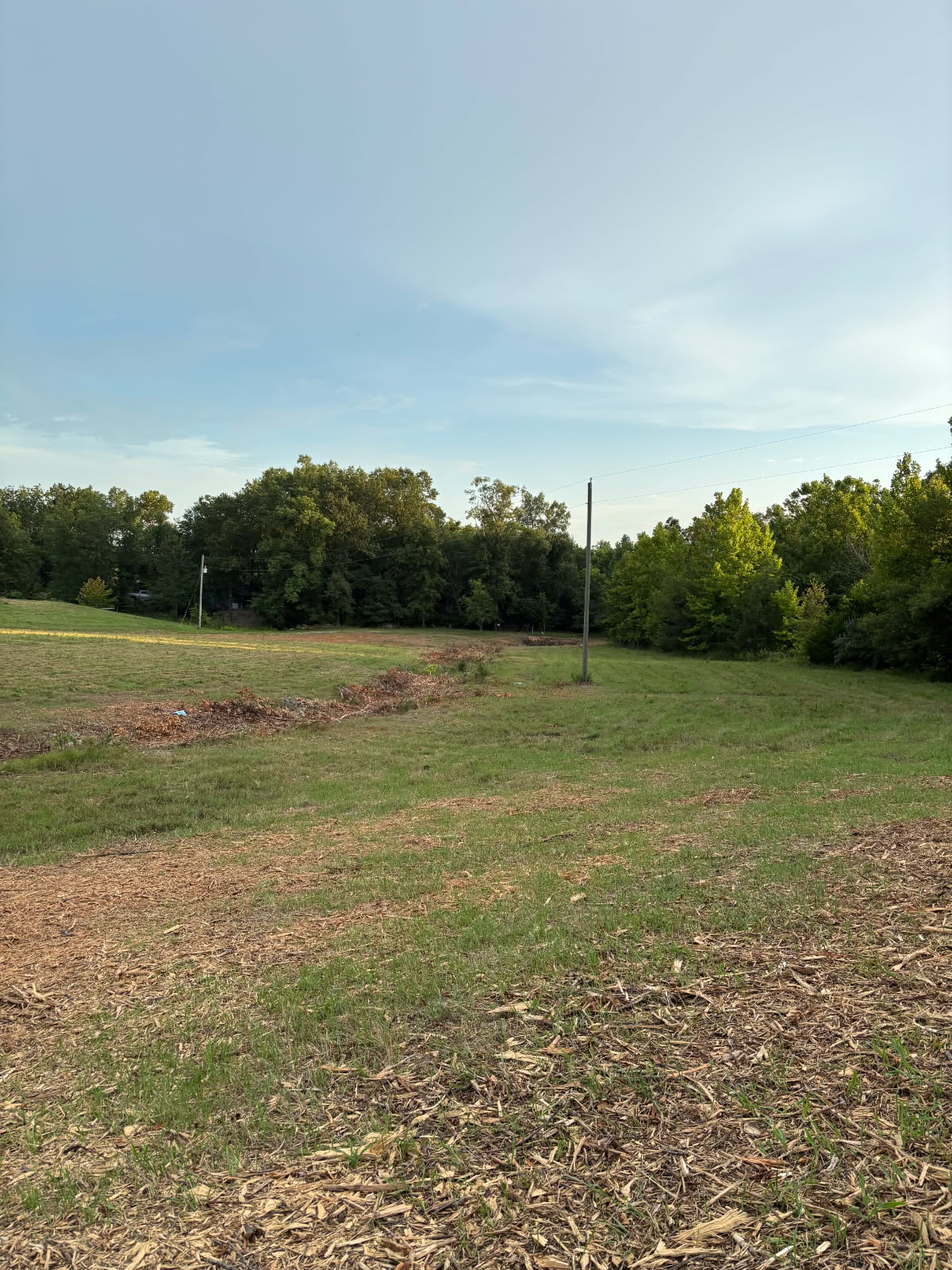
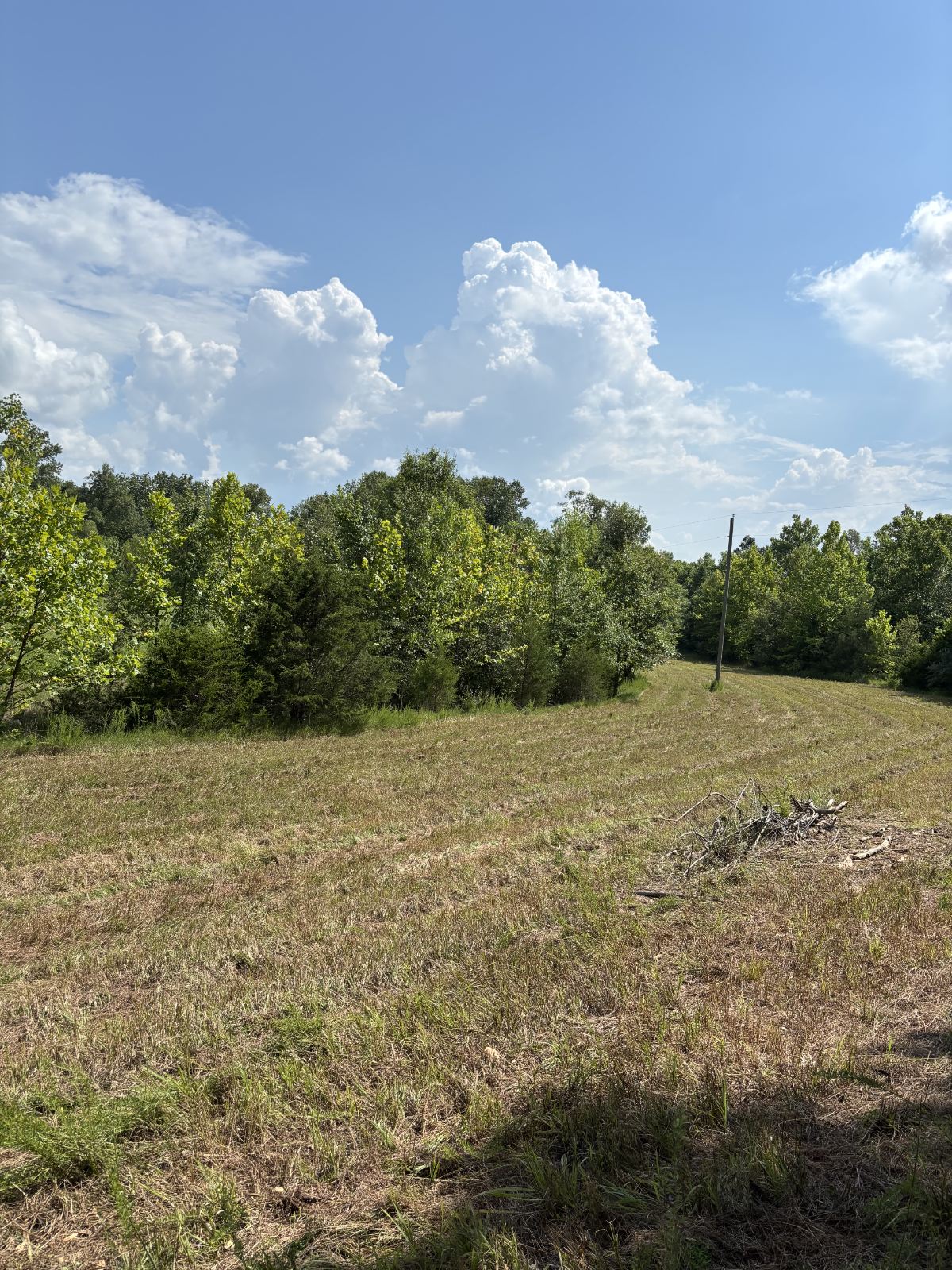
Thick brush under the pines ground into mulch. The big trees stay.
How We Do It
Mulch in place
Vegetation grinds into chips on contact. No burn pile, no fines from the county.
Selective by design
Take the whole stand or thread between mast trees you want to keep. You decide what stays.
One pass, one crew
One machine clears, grinds, and finishes. No coordinating three contractors or two equipment rentals.
Topsoil stays put
The machine floats over the surface. No dozer scraping, no torn-up ground, no erosion mess.
When landowners call us for forestry mulching
- Overgrown acreage that's become unusable — fence rows you can't walk, woods you can't see into, trails that closed in
- Pre-listing prep for sellers with parcels that show like a jungle
- Hunting tract openings — shooting lanes, food plots, trail networks
- Selective understory clearing that keeps mast trees and habitat intact
- Vacant lots the city has started sending code-enforcement letters on
- Fire-break cutting for rural properties and woodlots
- Builder site prep where preserving the footprint trees matters
- Right-of-way and easement maintenance for utilities and pipelines
How the job runs
Send a few photos and the rough acreage
Text us pictures of the worst spots and a guess at the acreage. That's enough to give you a ballpark before we drive out.
On-site walk-through
We walk the property with you, flag what stays and what goes, and quote the job flat. No hourly games.
On the schedule
Pick a window. We show up when we say we will, with the right machine for the density.
One-pass clearing
Operator grinds the growth into mulch. Selective trees and fence lines stay clean. The chips drop where the brush used to stand.
Walk it before we leave
We walk the finish with you and touch up anything that needs it. Then the machine gets loaded and the land is yours again.
What it costs, and why
Forestry mulching is priced per acre with a flat quote. Most of the region is priced in three brackets: light ($1,000-$1,750/acre) for 0-10% slopes with open brush; medium ($1,750-$2,750/acre) for 10-20% slopes with mixed brush and small trees up to 6 inches; and heavy ($2,750+/acre) for 20+% slopes, thick brush, 6-12 inch trees, and rocky soil/terrain. We also offer hourly rates ($300/hr, 3-hour minimum) and day rates ($2,300/8hr day) for piecemeal projects. Once we walk the property, we give you the bracket your land fits and lock the quote flat.
Why the equipment matters
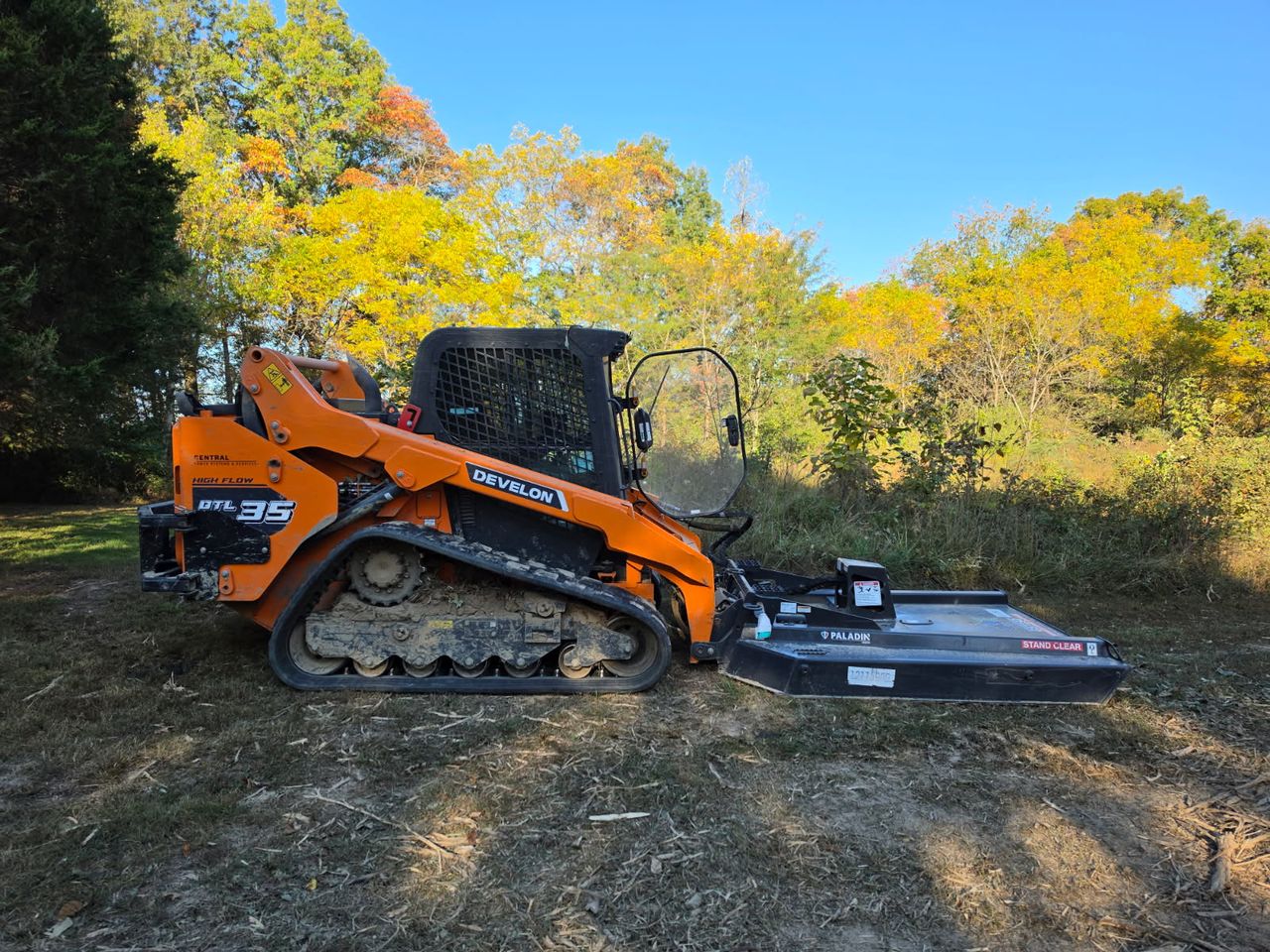
We run a Develon DTL35 compact track loader — a skid-steer built for forestry work with a high-flow hydraulic circuit — paired with a VAIL X-series mulcher head. The combo handles material up to about 8 inches comfortably and 10 inches when density allows. Tracks protect topsoil on soft ground. The operator has over a decade of seat time, including two years running equipment in Antarctica, seven years as a custom harvest operator from Texas to Canada, and pipeline construction. You're getting a professional, not a guy who bought a mulcher last month.
Compared to the other ways to do this
Forestry mulching vs. traditional land clearing
Traditional clearing is three jobs: cut, haul, burn or chip, then grade. Forestry mulching is one pass that does all three with no burn pile and no torn-up topsoil.
Forestry mulching vs. bush hogging
A bush hog cuts soft grass and saplings under 2 inches and leaves stalks behind. A forestry mulcher grinds standing trees up to 8 inches into mulch. Bush hogs maintain; mulchers reclaim.
Forestry mulching vs. dozer clearing
A dozer pushes everything into a pile and strips topsoil with it. A forestry mulcher leaves the soil intact and the mulch on top as erosion control. Dozer is cheaper per hour but costs more in grade-work and re-seeding after.
Related Services
Land Clearing
Trees, brush, undergrowth — cleared in one pass. No burn piles, no haul-off.
Stump Grinding & Removal
Stumps of any size, ground below grade. No mower strikes, no tripping hazards.
Brush Clearing
Take back the woods edge, the ditch, the fence line, the vacant lot.
Forestry Mulching across Southern Illinois
We bring forestry mulching to landowners across the St. Louis Metro East and Southern Illinois from our base in Patoka, IL.
Frequently Asked
Ready to Walk Your Land Again?
Send us photos and rough acreage. We come look, give you a flat quote, and put you on the schedule. Fast, no pressure.
Serving Southern Illinois, the St. Louis Metro East, and surrounding counties