
Pasture Reclamation Services for Cattle & Hay Ground
Cedar and locust eating your pasture? We reclaim grazing acres and leave a mulch layer that protects the soil while you re-seed.
Quick Answer
Cedar and locust eating your pasture? We reclaim grazing acres and leave a mulch layer that protects the soil while you re-seed.
Get every grazing acre back
Eastern red cedar, locust, multiflora rose, and brush eat pasture quietly. One summer you notice half your grazing acres aren't pulling their weight — cattle are bunched up on the good ground, the rest is filling in with junk. We clear the unwanted growth in one pass, leave a mulch layer that protects the soil while you re-seed, and put you on a maintenance cycle so it doesn't come back.
The slow loss of pasture to woody invasives is one of the most common problems we see in Southern Illinois. A pasture that was clean in 2015 can be 40% junk woody cover by 2025 without the owner realizing how bad it got. The usual suspects around here: eastern red cedar, honey locust, black locust, multiflora rose, and autumn olive. Each of them eats grazing capacity and none of them come out with a bush hog.
Our forestry mulcher grinds cedars up to 8 inches, locust, brush, and surface root crowns in one pass. The chips drop as mulch — which is actually a benefit on pasture ground because the mulch layer holds moisture, protects the seed bed, and breaks down into organic matter. Most customers are back grazing within the season.
We know what to leave. Shade trees for cattle, fence-line wind breaks, and any specific trees you want kept stay up. You decide.
Researching the job?
How to reclaim overgrown pasture
Review clearing methods, reseeding timing, and the maintenance cycle that keeps cedar and locust from returning.
How We Do It
Built for cattle ground
We know what to leave standing (shade trees, wind breaks, corner trees) and what to take.
Soil-friendly finish
The mulch layer holds moisture, protects the seed bed, and breaks down into organic matter.
Maintenance cycles
Yearly or every-other-year passes so the brush and cedars never get a foothold again.
Cedar specialist
Eastern red cedar up to 8 inches is part of the standard job, not an add-on.
When landowners call us for pasture reclamation
- Cedar-invaded pasture that's lost half its grazing capacity
- Locust and honey locust removal from cattle ground
- Fence-line brush that's shrinking the grazing area
- Hay ground reclamation before seeding
- Perimeter wooded-edge cleanup to recover tillable feet
- Recreational pasture kept open for horses and livestock
- Rotational grazing setup on newly acquired ground
- Pasture restoration after years of neglect or absentee ownership
How the job runs
Send photos and aerial acreage
Google Maps imagery is enough to see what we're dealing with. Send us the parcel and we'll give you a bracket estimate.
Walk the pasture with us
We walk the ground, flag the trees you want kept, and quote the cleared acreage flat.
One-pass clearing
Cedar, locust, and brush grind into mulch chips in place. Shade trees and fence corners stay. No burn pile.
Re-seed as soon as you're ready
The mulch layer doesn't stop grass seed — it helps. Drill, broadcast, or frost-seed right over the chips.
Put it on a maintenance cycle
Annual or every-other-year passes keep the cedar and brush from getting re-established. Much cheaper than a repeat clear.
What it costs, and why
Pasture reclamation starts at $1,200 per acre. The slight premium over baseline forestry mulching reflects cedar density — cedar stands with 8-inch trees on tight spacing take more time than mixed brush. Maintenance cycles after the first clear are priced lower, often half the fresh-clear rate, because the growth has been knocked back.
Why the equipment matters
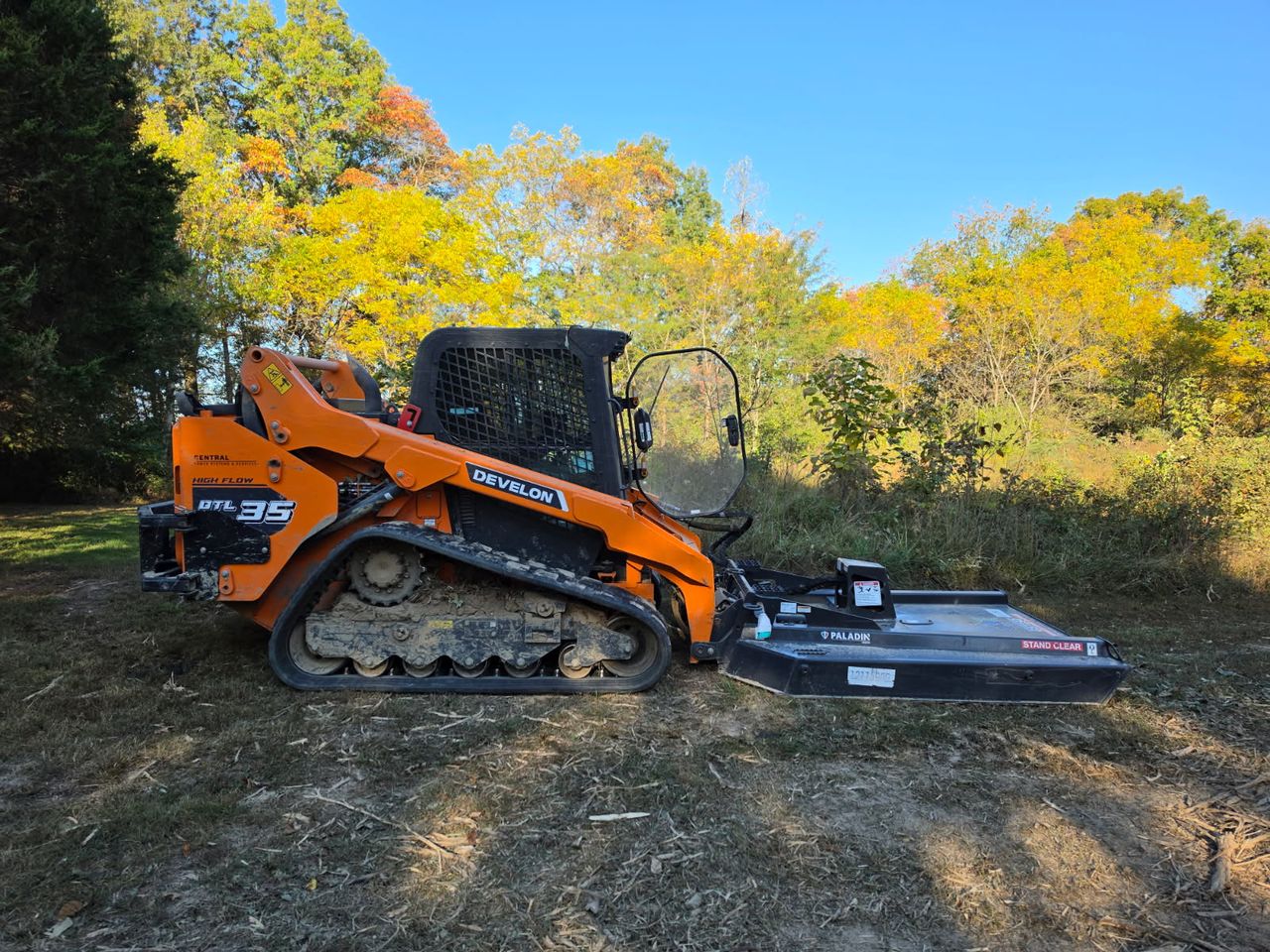
Cedar is hard on mulcher teeth. We run carbide teeth and carry spares. The Develon DTL35 has the hydraulic flow to keep the VAIL head spinning through a stand of 6-inch cedars without bogging, which is what separates production work from a machine that stalls every few minutes. The operator has over a decade of equipment time including seven years of custom harvest work — hundreds of hours on cattle and hay ground across the Midwest and Great Plains.
Compared to the other ways to do this
Forestry mulching vs. bush hogging pasture
A bush hog never catches cedar or locust. It just gets bigger every year. One mulcher pass resets the ground, then a bush hog can keep it clean for easy spots.
Forestry mulching vs. dozer push
A dozer strips topsoil with the cedars and leaves a pile you have to burn. Mulching leaves the soil intact and the chips in place as organic matter.
Forestry mulching vs. chainsaw + burn
The old way works but it's a week of labor per acre, burn permits, and a brush pile you're watching for three days. Mulching finishes a pasture in hours instead of weeks.
Related Services
Pasture Reclamation across Southern Illinois
We bring pasture reclamation to landowners across the St. Louis Metro East and Southern Illinois from our base in Patoka, IL.
Frequently Asked
Ready to Walk Your Land Again?
Send us photos and rough acreage. We come look, give you a flat quote, and put you on the schedule. Fast, no pressure.
Serving Southern Illinois, the St. Louis Metro East, and surrounding counties